Your business requires routine sanitation based upon potential hazards, operational volume, food allergen presence, and health inspections, plus verification documentation supporting HACCP compliance, regulatory audits, and government health requirements. The following sections detail critical cleaning system elements.
Key Takeaways
- Brampton food safety cleaning experts support restaurants, grocery departments, commissaries, warehouses, bakeries, schools, mobile vendors, and allergen-sensitive operations.
- Frequently contacted areas, food-contact equipment, kitchens, floors, drains, restrooms, and storage areas are sanitized using sectional methods to avoid cross-contamination.
- Approved sanitizer dilution, appropriateness, and exposure duration are verified by qualified contractors, with finishing logged via swabs, inspections, and correction logs.
- Risk, output capacity, changeovers, accidents, and standards should shape sanitation calendars, with regular, recurring, and cyclical duties assigned by location.
- Contractors need to exhibit HACCP, sanitation expertise, safety training preparation, protection, credentials, color-categorized tools, and compliance-ready hygiene records.
What Brampton Establishments Require Food Safety Cleaning?
Any Brampton facility that handles, stores, prepares, packages, or serves food needs hygiene cleaning. You must apply it if your business falls under public health inspection, food premises regulations, or internal HACCP-based controls. That requirement covers eateries, dining facilities, food distribution centers, supermarket departments, meat markets, fish counters, corner stores, and commercial kitchens.
Proper hygiene protocols is necessary in warehouses, food manufacturing plants, cold storage sites, retail bakeries, school nutrition programs, banquet halls, and meal delivery hubs. Portable temporary ventures are included, including mobile kitchens, market vendors, and seasonal booths. Your venue needs established hygiene documentation when your team prepare supplies, portion finished foods, reheat dishes, or organize allergen inventory. In Brampton, food safety remains not voluntary; it comprises lawful, operational, and customer protection standards.
Which Areas Do Brampton Cleaning Experts Cover?
Your operation needs cleaning professionals who disinfect frequently contacted surfaces, cooking and food prep areas, all floor types, and toilet facilities to maintain food safety compliance and public health standards. These zones receive attention due to their elevated cross-contamination potential, trip and slip dangers, and violations of hygiene standards.
Understanding their cleaning procedures enables you to validate your facility's cleaning meets required standards and regulations.
High-Touch Surface Disinfection
Handling high-touch surface disinfection is important for Brampton maintenance specialists because contact points can transfer pathogens and contaminants across a establishment. You should establish a scheduling system for sterilizing all high-touch items including handles, plates, switches, railings, control surfaces, POS systems, and refrigeration equipment. Implementing surface identification mapping, specialists locate every high-traffic point and establish cleaning timing
by changing wipes, implementing sequential workflows, and dividing disinfection tools organized according to location
Kitchens, Floors, and Restrooms
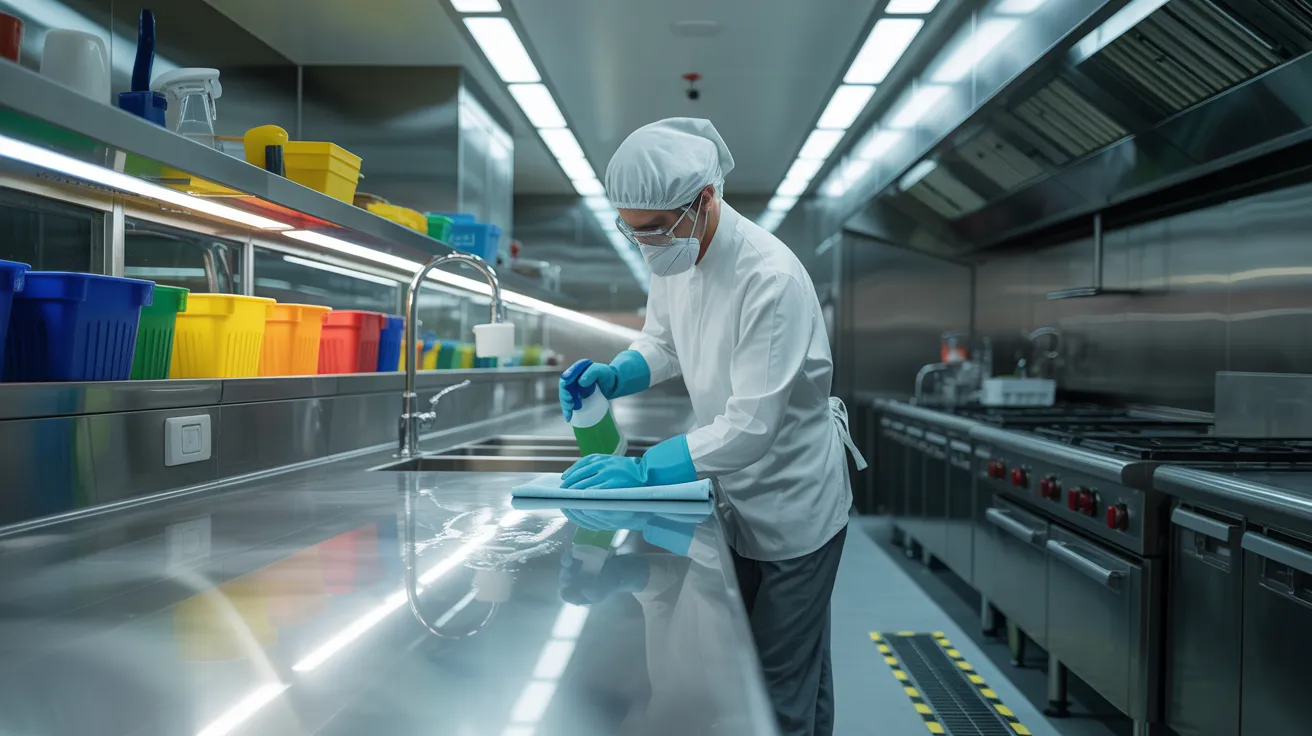
Expect Brampton cleaning experts to target kitchens, floors, and restrooms because each area carries distinct foodborne illness prevention, slip-and-fall, and sanitation risks. In industrial kitchens, you need degreasing on cook lines, equipment exteriors, drains, prep surfaces, and splash zones to reduce contamination and pest pressure.
Professional floor care with documentation is also included. is likewise provided as part of the service.
For restroom sanitation, cleaners disinfect touchpoints, fixtures, partitions, dispensers, and waste containers, then refill items and eliminate smells. They also maintain restaurant cleaning supply rooms where product storage, sink cleanliness, and drain systems impact daily sanitation standards and worker protection.
How Food Safety Cleaning Benefits Brampton Operations
To adhere to regulatory mandates and succeed in audits, Brampton facilities must maintain food-safe cleaning standards. You also reduce bacterial spread through proper cleaning of food-preparation surfaces, appliances, and frequently-touched items. Most importantly, you help protect public health by lowering the risk of foodborne illness in your facility.
Food Safety Regulations
Food establishments in Brampton face stringent health requirements, making food safety cleaning critical to adhering to health code requirements, safeguarding patrons, and sidestepping enforcement action. You must maintain sanitary food-contact surfaces, verifiable cleaning logs, safe chemical management, and auditable operational standards that meet municipal and provincial inspection expectations.
Keeping well-maintained cleaning files shows due diligence for compliance reviews and demonstrates that your procedures are reliable, consistent, and tracked.
Cross-Contamination Avoidance
Following regulatory requirements depends on your skill in stopping cross-contamination in daily food handling and cleaning. You should isolate raw items from prepared foods, sanitize prep surfaces between tasks, and maintain separation of cleaning products from food. Well-defined guidelines decrease contamination chances and promote steady regulatory adherence.
You should implement allergen segregation to prevent major allergens from touching shared surfaces, containers, or equipment. Use dedicated cutting boards, color-coded tools, and careful equipment identification so employees avoid combining products during preparation or service. Require handwashing after handling uncooked proteins, shellfish, egg items, or allergen products. Replace wiping cloths regularly, and check disinfectant potency using test kits. When you train staff to follow these controls each work period, you create a cleaner, safer operation that satisfies Brampton's safety standards daily.
Community Health Safety
When food safety cleaning deteriorate, you don't only face inspection setbacks—you raise the likelihood of food contamination striking customers, staff, and the larger Brampton community. You also undermine your responsibility in safeguarding community wellness, especially in busy food facilities where pathogens travel quickly through surfaces, equipment, and touchpoints.
You require cleaning procedures that eliminate soils, sanitize properly, and verify outcomes. This requires following contact periods, utilizing approved disinfectants, documenting procedures, and instructing staff to satisfy regulatory standards. These controls promote disease prevention by limiting pathogens before reaching food or hands. Across Brampton, strong cleaning safeguards vulnerable groups, reduces disease potential, and demonstrates accountability. When you follow standards, you go beyond requirements—you meaningfully reduce risk and enable safer food service city-wide.
How Does Cleaning Support Food Safety Compliance?
Comprehensive cleaning schedules support food safety compliance by minimizing contamination hazards, preventing pathogen multiplication, and positioning your facility in accordance with sanitation requirements under HACCP-based programs and public health regulations. You verify that food-contact surfaces are visibly clean and microbiologically controlled, supporting documented preventive controls and inspection readiness.
Effective cleaning also improves allergen control by removing residues that can lead to undeclared allergen exposure. by eliminating residues that can trigger undeclared allergen exposure.
When Ought You Schedule Commercial Cleaning?
gather pollutants. Increase frequency
promotional occasions, catering functions, or public functions ought to arrange cleaning prior to and following for successful event turnaround. Document timeframes, check that work is completed, and revise schedules if hazards, volumes, or regulations evolve
Selecting the Right Brampton Cleaning Experts: Key Considerations
Begin by evaluating providers based on sanitation compliance standards—not solely on price alone. You should confirm that each organization comprehends CFIA, public health, and HACCP-aligned expectations applicable to your facility. Request insurance certificates, WHMIS compliance, staff training documentation, and oversight procedures. Assess whether technicians recognize cross-contamination hazards, chemical handling protocols, and verifiable sanitation records.
Additionally, you need to evaluate service dependability and accountability. Obtain references from Brampton food operations, then review response times, corrective-action procedures, and communication standards. Verify the company conducts supplier reviews and can deliver inspection-ready documentation when inspectors or external parties need proof. Verify equipment upkeep, color-coded equipment are applied correctly, and site-specific hazards are identified. A qualified provider protects compliance, product quality, and your reputation.
Which elements are part of a Food Safety Cleaning Plan?
Create a written plan that clearly outlines every sanitation duty, guideline, and expectation prior to beginning production. You should document cleaning frequencies, approved chemicals, dilution rates, contact times, tools, and verification methods for each zone, surface, and piece of equipment. Be sure to include pre-operational inspections, corrective actions, and employee training requirements.
Your plan should also tackle prevention of contamination, waste management, pest-control tactics, and scheduled records for restrooms, drains, floors, and food-contact areas. Specify how you'll distinguish between uncooked and prepared items, support ingredient tracking, and keep accurate allergen labeling through validated cleaning between product changes. You should establish accountability, document signed records, and assess results against regulatory standards, HACCP controls, and customer requirements. When gaps appear, modify procedures immediately and instruct staff.
Commonly Asked Inquiries
Will sanitation providers handle nighttime hours at Brampton properties?
If you run regulated facilities, you'll also require documentation that enable audits and ensure compliance.
Will Brampton cleaning experts address hazardous incidents?
Yes, you can locate Brampton cleaning professionals providing spill response options. They handle hazardous incidents, assess dangers, contain affected zones, and initiate rapid cleanup to reduce risk and prevent business disruption. You should confirm timeframes, certifications, PPE measures, and waste procedures. If your facility must adhere to regulations, select a service that documents events, adheres to standards, and ensures audit compliance.
Can green disinfectants be applied securely on food-contact surfaces?
Absolutely, eco-friendly disinfectants prove to be suitable for food-contact surfaces when you choose products labeled food safe and satisfying regulatory requirements. You must check exposure duration, dilution rates, and find here rinse protocols prior to application. Plant-derived products reduce toxic chemical contact, though you still need proof of efficacy against specific pathogens. For preserving residue-free areas, follow manufacturer instructions exactly and validate the disinfecting agent satisfies relevant food safety standards.
Can cleaning schedules be adjusted for seasonal shifts?
Certainly, maintenance plans adjust to seasonal production changes effectively. Adjust schedules, personnel, chemicals, and testing procedures to match with operational cycles while preserving regulatory compliance. Lower operational delays through scheduling cleaning amid equipment transitions, peak seasons, and equipment use patterns. Additionally modify written procedures, staff education, and monitoring protocols to reflect temporary risks, new allergens, or increased soil loads. Scheduled reviews preserve the schedule effective.
Do commercial cleaners train employees on hygiene standards?
Indeed, commercial cleaning providers often offer staff training on proper hygiene. Your team receives training on proper chemical use, exposure durations, preventing cross-contamination, equipment breakdown, and documentation. They generally adhere to instruction with HACCP, GMP, and CFIA or local public health requirements. Many also execute sanitation audits to verify compliance, reveal issues, and reinforce corrective actions. This assists you to establish reliable processes, achieve compliance, and reduce food safety risks each day.
Conclusion
By partnering with Brampton commercial cleaning and food safety professionals, you aren't simply tidying—you keep your operation inspection-ready and your practices in compliance. From production areas to kitchen zones, every sanitized surface and organized space reduces pest risk and prevents costly issues. By scheduling cleanings on the right schedule and adhering to a systematic cleaning protocol, you secure staff members, customers, and your credibility. In a strictly regulated industry, hygienic conditions must be prioritized—they're key to business compliance.